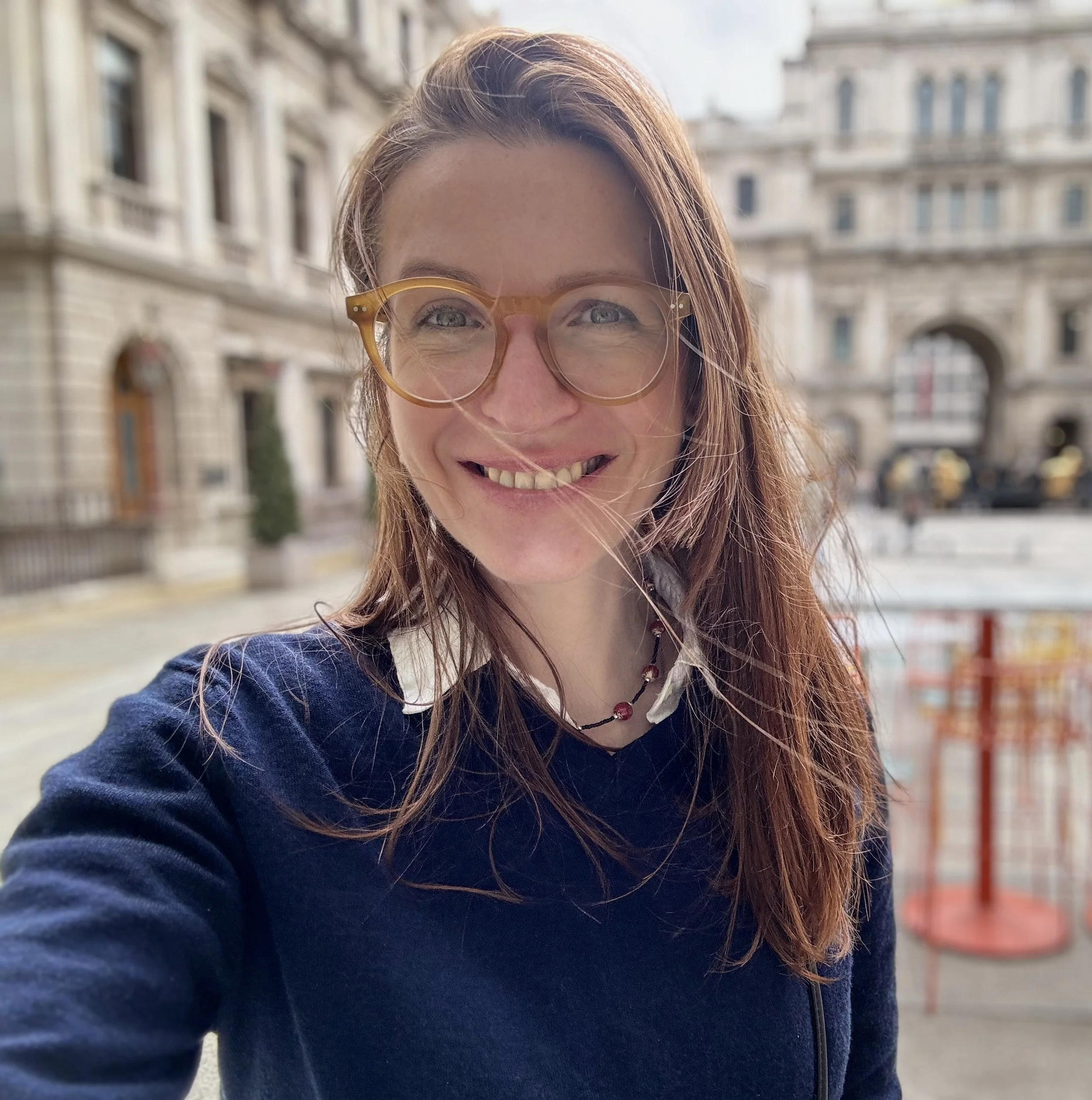
Lilia Kodunova is a Ukrainian-born figurative artist based in Kent, UK. Her practice is concerned with the human figure as a site of psychological experience, exploring memory, displacement, vulnerability and the complexities of human connection.
Kodunova’s paintings emerge from a sustained engagement with observation and drawing. Her training in realist painting in Kyiv, followed by her studies at the Royal Drawing School in London, established a strong foundation in the traditions of figurative painting. Within this framework, she has developed a more subjective approach in which the observed figure becomes a means of addressing experiences that are difficult to articulate directly.
The figures in Lilia’s paintings often appear in states of suspension or uncertainty. Gestures, expressions and relationships between bodies carry a psychological weight, while the surrounding space remains deliberately ambiguous. Rather than constructing explicit narratives, she allows fragments of experience to accumulate within the image, leaving the circumstances of the figures open to interpretation.
Memory and displacement are recurring concerns within the work. Kodunova’s experience of moving from Ukraine to the UK informs an interest in what is retained, altered or lost through change. Personal experience is not treated as autobiography, but as a starting point from which broader questions of belonging, separation, attachment and resilience can emerge.
Her approach to painting is grounded in a tension between observation and invention. Figures are developed through drawing and repeated looking, while composition, colour and the treatment of the painted surface evolve through the process of making. Areas of precise description exist alongside passages that are deliberately unresolved, allowing the paintings to move between physical presence and psychological suggestion.
Lilia’s resent work brings these concerns into increasingly intimate compositions, focusing on the relationships between figures and the emotional space that exist between them. The paintings remain rooted in the physical reality of the body while using it to explore states of uncertainty, connection and change.